
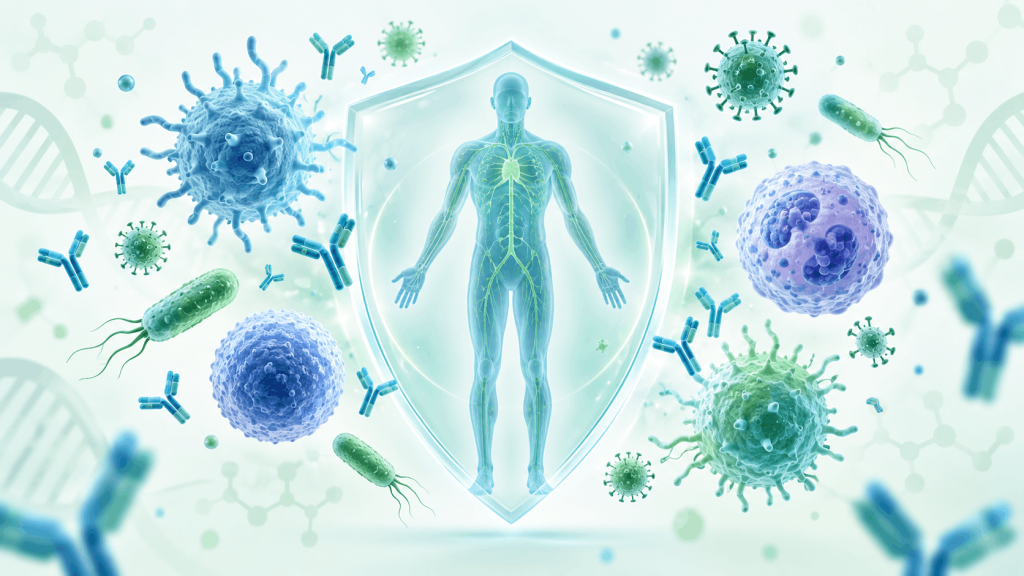
Welcome to the first immunology post on BioinfCamp!
In our upcoming posts, we are going to write about immunology and the immune system. More specifically, our aim is to explain how the immune system works, how it protects the body, and introduce important topics such as antigens, immunization, innate immunity, and adaptive immunity.
Therefore, we will begin this series with a simple introduction to immunology.
What Is Immunology?
Immunology is a branch of biological science that studies the immune system and how the body defends itself against infections, pathogens, and other foreign agents.
A Brief History
The roots of immunology go back to a concept known as variolation.
For example, variolation was one of the earliest human attempts to create immunity against smallpox. In this method, practitioners scratched the skin of a healthy person and introduced material containing the smallpox virus into the body to create immunity.
Later, in the late eighteenth century, Edward Jenner developed vaccination against smallpox after drawing inspiration from this concept. For this reason, historians often associate the beginning of modern immunology with his work.
Antigens and Immunization
The immune system naturally produces responses against antigens from pathogens, such as viruses and bacteria. However, we can also deliberately stimulate it using simple and non-living antigens. As a result, this approach has played an important role in our understanding of how the immune system works.
In this targeted stimulation, the antigen itself is not the only important factor. In addition, the dose, route of administration, and form of antigen presentation can determine whether the immune system produces a response and what type of response it produces.
Therefore, we call the process of deliberately stimulating the immune system to produce an immune response immunization.
Levels of the Body’s Immune System
Adaptive Immunity
First, adaptive immunity is the body’s specific response against infections. This type of immunity develops throughout life and protects the body against diseases that it encounters.
Innate Immunity
In contrast, innate immunity is non-specific and is always present and ready to act. The soldiers of this part of the immune system engulf and digest foreign agents. Therefore, they provide the body’s immediate defence.
Finally, in future posts, we will discuss these parts of the immune system and how they work in more detail.